2018年9月27日星期四

AliveCor gets FDA breakthrough status for Hyperkalemia diagnosis

"/

Hyperkalemia is defined as the condition where there would be a higher potassium level in blood. The potassium level goes higher due to chronic kidney disease and type 1 diabetes, suffered by millions of people. Irregular heartbeat is the common symptom of hyperkalemia. A blood sample is required to detect the potassium level till date.
But a Silicon Valley start-up company named AliveCor along with the doctors from Mayo Clinic have developed a novel technology, where the blood sample is not required. Just by looking at the electrocardiogram (ECG) pattern which records the electric signals of the heart, the level of potassium can be detected.
Hence, the U.S. Food and Drug Administration had given ‘breakthrough device’ designation on 10th September 2018 for a novel way of potassium level measurement.
Vic Gundotra, the CEO of AliveCor, said "It was a pie-in-the-sky idea that we could use AI to see something like this in the ECG when no one else could; It's a big milestone for us."
This screening tool would prove beneficial for the patients who stay at home and don’t prefer to visit labs and give the blood sample.
AliveCor team expects that this product would reach the market in a year, after the submission of clinical trial results.
from Drugdu  https://goo.gl/QgQoHk

2018年9月20日星期四

New drug formulation for opioid addiction approved by FDA

"/

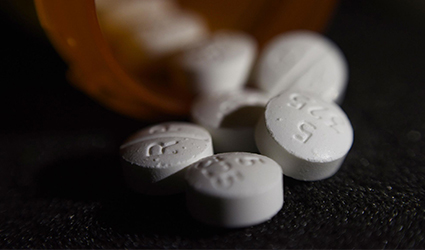
Cassipa, a Teva Phaarmaceuticals manufactured sublingual film containing naloxone and buprenorphine in new dosage amounts, receives FDA approval on the 7th of September as a continuing therapy for opioid addiction.
In a press release, the FDA announced that the buprenorphine and naloxone sublingual film, formulated in a 16 mg/4 mg dose for Cassipa, is sanctioned not only in its brand version but also in its generic edition. The two drugs in different strength combinations are also approved by the FDA.
A set management protocol including psychotherapy and counseling should comprise of Cassipa post the patient is administered and stabilized with a step-ladder buprenorphine 16 mg dose of another brand. Drug Addiction Treatment Act (DATA) certified professionals only can prescribe these drugs.
There’s an urgent need to ensure access to, and wider use and understanding of, medication-assisted treatment for opioid use disorder ... the FDA recently described a streamlined approach to drug development for certain medication-assisted treatments that are based on buprenorphine. This streamlined approach can reduce drug development costs, so products may be offered at a lower price to patients and we can broaden access to treatment,” FDA Commissioner Scott Gottlieb, MD, mentioned in the statement.
Adding that, “individuals who successfully transition onto medication-assisted treatment are not swapping one addiction for another. Opioid replacement therapy can be an important part of effective treatment. Opioid use disorder should be viewed similarly to any other chronic condition that is treated with medication.”
Opioid use disorder patients are recommended to be treated with Medication-assisted treatment (MAT), a methodical way amalgamating counseling, psychotherapy and drug formulae approved by the FDA. 
Suboxone sublingual film’s safety and efficacy testing by the FDA proved beneficial, partly, in getting approval for Cassipa via the abbreviated 505(b)(2) approval pathway.
from Drugdu  https://goo.gl/QgQoHk
2018年9月11日星期二

Retention in de-addiction therapy increased on administration of medicines

"/

Medications like buprenorphine, naltrexone, or methadone when added to treatment of opioid use disorder (OUD) youths, resulted in longer adherence to in-care regimen. However, very few receive the medicines, reveals a retrospective cohort study.
The study on 4,837 OUD youths between the age 13-22 years including 2,752 females observed that only 1 out of 4 youths and 1 out of 21 adolescents received medication, as reported by Scott E. Hadland, MD, MPH, MS, of Grayken Center for Addiction and Department of Pediatrics, Boston Medical Center, and coinvestigators.
The results brought greater attention to the need for better management of OUD in young adults and increase their adherence to treatment, noted Dr. Hadland and co-authors in JAMA Pediatrics.
As deaths from overdose increase among U.S. youths, it is vital that clinicians, researchers, and policy makers ensure that access to evidence-based OUD medications for young people remains a national priority,” they said.
The researchers found that retention in de-addiction centres was higher in youths who were given OUD medications on scheduled time. In care median retention was observed to be 67 days when youths were given only behavioural therapy. However, it jumped to 123 days, 150 days and 324 days on giving buprenorphine, naltrexone, or methadone respectively.  
Dr. Hadland and co-authors feel that staying in care is imperative to ensure effective treatment of OUD, “Even when patients do not reduce their substance use, individuals engaged and retained in care can receive harm-reduction services and treatment of comorbid medical and psychiatric conditions.”
from Drugdu  https://goo.gl/QgQoHk

2018年9月6日星期四

Highly Resistant Food Poisoning Bug Responds to Antibiotics

"/

Listeriosis is a deadly food-borne infection caused by consuming contaminated food like meats, soft cheese, salads, smoked salmon etc. Listeriosis is more dangerous for immunocompromised people including infants and the elderly. In pregnant women, this infection could even lead to miscarriage. Listeria always reproduces within the body cells and is called a food-poisoning bug but could potentially even affect the brain, for which only a few therapeutic options are available.

Hence a research team from the University of Edinburgh suggested that fosfomycin should be reconsidered. Though Listeria bacteria carry highly resistant genes based on early laboratory tests, they can respond to fosfomycin antibiotics as per further animal studies conducted in a lab. The study team also explained that when a bacteria infects the body, certain genes could be activated, which cancels the effect of a specific gene that destroys the drug effect.
The study was published in the journal PLOS Genetics, which was funded by the Wellcome Trust.
Professor Jose Vazquez-Boland, the lead investigator from the University of Edinburgh's Division of Infection Medicine, said "Our study focused on Listeria, but this important discovery may be relevant for other species of bacteria too. It is encouraging that we may be able to repurpose existing drugs in the race against antibiotic resistance."
from Drugdu  https://goo.gl/QgQoHk

2018年9月3日星期一

Study Discovers New Mechanism of Immune System to Fight Disease

"/

The disease-fighting capacity of the body depends on the proper functioning of its immune system. Hence, a new discovery revealing new insight into its functioning by University of Queensland (UQ) researchers could reveal new ways to treat diseases like cancer and autoimmune disorders.
A study headed by Kate Schroder, associate professor and Molecular Bioscience researcher at UQ, found a new mechanism by which the immune system fights bacteria. Their study was published in Science Immunology.

"Bacteria are often quickly killed by white blood cells called neutrophils, which are the body's initial line of defense against infection," Dr. Schroder said.
"We discovered an unexpected secondary line of defense that is deployed against bacteria that have evaded the initial immune response and invaded the neutrophil itself. This new immune defense pathway is mediated by an 'executioner' protein called Gasdermin D. This protein drives an unusual form of 'cellular suicide', where the cell expels structures called neutrophil extracellular traps (NETs) to catch the infection and prevent it from spreading."
A supplementary line of defence is offered by NETs which basically are a meshwork of DNA strands containing microbe destructing proteins that halt and destroy bacteria. A relation between NETs and neutrophil destruction was earlier known, however, these findings unearthed a new Gasdermin D and inflammasome (molecules that identify and control infections) based line of defence.
The pathology of certain autoimmune and inflammatory disorders like cancer could also be based on NETs, added to its microbe fighting function, said Dr. Schroder.
"It's important we understand the basic cellular mechanisms of inflammation before we develop treatments for various immune-related diseases," Dr. Schroder added. "Understanding how the Gasdermin D drives neutrophil death and the expulsion of NETs could lead to new therapeutic targets for immune-related diseases, which could in turn lead to more effective treatments and improve quality of life for affected individuals."
from Drugdu  https://goo.gl/QgQoHk

Join Drugdu.com’s Online Medical Devices Exhibition to Discover Global Trading Opportunities


Drugdu.com Online Medical Devices Exhibition

Drugdu.com (Ddu), the leading global pharmaceutical and medical device B2B online platform, is presenting an Online Medical Devices Exhibition from September to December on Ddu’s official website and mobile app.

This expo will include some of the top manufacturers such as X&Y International Corporation and Shenzhen Tianlang Medical Equipment. More than 5,000 medical device suppliers from all over the world have registered as participants to join this online event. The Online Medical Devices Exhibition aims to assist both buyers and suppliers worldwide to seek new business opportunities through Drugdu.com’s online platform.
Expected to exceed 477.5 billion USD by 2020, the increasing speed of the global medical device market is the best evidence that proves the great potential within this field. As a results, the Online Medical Devices Exhibition creates an effective shortcut for buyers to achieve their online business opportunities.
Buyers on Ddu can enjoy a smart and groundbreaking new way of selecting any of over 1,000,000 medical products from more than 100,000 global suppliers with specific classifications. With the assurance and protection of the Ddu Credit Verification system, which is collaboration with Swiss SGS and German TÜV Rheinland, buyers and suppliers are able to establish reliable partnerships across the globe.
Regarding product categories, Drugdu.com (Ddu) has 9 main categories for pharmaceutical drugs and 7 main categories for medical devices according to a product’s functions. The sub-categories further serve as a guide to buyers efficiently search for specific products. With the relevant details listed beside the products, time and costs are greatly reduced amounting only to an Internet connection and a mouse click.
Drugdu.com’s (Ddu) mission is to solve the issue of finding products by matching the information of international supply and demand, offer comprehensive solutions and become the leading information center of the medical industry.
About Drugdu.com (Ddu)  
Drugdu.com (Ddu) is the leading global B2B online platform focused on the cross-border trade of pharmaceuticals and medical devices. As a pioneer in the industry, Ddu's advanced technology and user-centered services is aimed at not only accelerating the circulation of pharmaceuticals and medical devices around the world, but also simplifying industry trading, making it more practical and efficient.
For more information about Drugdu.com (Ddu), visit our website at http://www.drugdu.com or follow us on Facebook, LinkedIn, Twitter, YouTube and Google Plus.
If you are interested in the Drugdu.com (Ddu) Online Medical Device Exhibition, please visit  
https://www.drugdu.com/Online-Medical-Equipments-and-Devices-Exhibition-2018-Expo.html?dtag=10027102310246 
or contact Drugdu.com at marketing@drugdu.com

2018年8月30日星期四

Prototype for ‘Bionic Eye’ Created with 3D Printer

"/

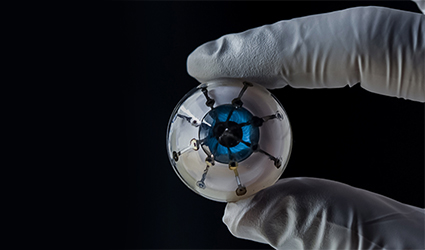
In a new advancement that could benefit the blind, researchers from the University of Minnesota could successfully 3D print an arrangement of light receptors on a curved plane, which could be the preceding steps to building a ‘bionic eye.'
"Bionic eyes are usually thought of as science fiction, but now we are closer than ever using a multi-material 3D printer," noted Michael McAlpine, co-author of the study and University of Minnesota Benjamin Mayhugh Associate Professor of Mechanical Engineering. Their paper was recently published in a materials science peer-reviewed scientific journal, Advanced Materials.
For the hour-long process, the team used their tailor-made 3D printer, incorporated with a silver particle based foundation ink, to draw on a hemispherical shell made out of glass, carrying out the tricky task of printing electronics on rounded planes without it dripping down. The ink remained on the surface and dried homogeneously. Subsequently, photodiodes, that transform light into electricity, were printed with the help of semiconducting polymer materials.
They were amazed to see 25% success in transforming the light into electricity with the semiconductors which were entirely 3D printed, exclaimed McAlpine.
"We have a long way to go to routinely print active electronics reliably, but our 3D-printed semiconductors are now starting to show that they could potentially rival the efficiency of semiconducting devices fabricated in microfabrication facilities," McAlpine said. "Plus, we can easily print a semiconducting device on a curved surface, and they can't."
The ‘bionic ear’ that surfaced in the news in the recent past, was an invention by the same team. They have gained fame for incorporating biology, 3D printing and electronics together on the same plane.
McAlpine aspires to build a prototype with added high-efficiency light receptors in the future and also look for a soft rounded plane to be implanted in the living eye. 
from Drugdu  https://goo.gl/QgQoHk
By Ddu

2018年8月28日星期二

WHO Reports a Doctor Being a New Probable Case of Ebola in Congo’s Violence Struck Area

"/

As dreaded by the WHO, the first possible case of Ebola of a doctor presenting Ebola symptoms in eastern Democratic Republic of Congo, a violence-hit unapproachable area.
The doctor, a resident of Oichia in North Kivu, is one among the 14 verified or probable cases in medical professionals. He tested negative for the preliminary test but has been hospitalized again owing to Ebola symptoms post a confirmatory test of his wife who had traveled to the neighboring city of Beni, as per WHO head of emergency operations, Dr. Peter Salama. However, reports from fresh samples are awaited.
The ADF Ugandan Islamist militia has sieged majority of Oicha, resulting in “extremely serious security concerns” after many civilians were killed, he said, adding that the region’s aid laborers, priests and government executives had been held hostage. North Kivu is threatened by dozens out of the 100 and more groups of gunmen that have caused bloodshed in eastern Congo.
For prevention, the acquaintances of the couple, totalling to 97 up till now, have been immunized in Oicha, as reported by Salama.
So for the first time really we have a confirmed case and contacts in an area of very high insecurity. It really was the problem we were anticipating and the problem at the same time that we were dreading,” he said.
 “We know from that incident now in Oicha we are going to have to operate in some very complex environments due to security and access concerns.”
No less than 900 people have lost their lives to Ebola since 1976 when it was first discovered on the Ebola River, causing 10 outbreaks in Congo till date.
from Drugdu  https://goo.gl/QgQoHk

2018年8月22日星期三

First Dual-Lead Nerve Stimulator for Pain Management gets FDA Nod

"/

SPR Therapeutics’ single- and dual-lead peripheral nerve stimulation devices win FDA nod as minimally invasive, non-opioid alternatives to treat acute chronic, postoperative and post-traumatic pain when implanted for up to two months.
The Sprint system, owned by SPR Therapeutics, comprises Endura, a single-lead device and the Extensa, market’s foremost double-lead device which enables physicians to manage cases by targeting two nerves in patients nursing wider injuries.
Leads are placed percutaneously in the back or extremities by the physician, as part of a clinical procedure not involving surgical incisions or anesthesia, while a sole, wearable electronic pulse initiator powered by rechargeable batteries and a remote control functioning via Bluetooth.
Our Sprint PNS platform is designed to deliver the least invasive and most user-friendly PNS therapy experience for physicians and their patients,” SPR’s founder, president and CEO, Maria Bennett, said in a statement.
At the end of the procedure, all parts of the device are removed, differing from other PNS systems requiring a permanent implant. SPR had attained a 510(k) approval in June 2016 for a 30-day regimen.
With the ease of use and dual lead capabilities we’ve built into the SPRINT System we look forward to advancing the early use of neurostimulation as a non-opioid alternative for more patients while we continue to generate data that demonstrate significant and sustained pain relief following our 60-day therapy,” Bennett said.
Early findings from a federally funded study of the system conducted on chronic post-amputation pain revealed a considerable decrease of at least 50% in two-thirds of patients post 8 weeks of treatment. Moreover, long-lasting pain relief was noted in four out of five patients who finished a 12-month study, maximum of which included implantation of dual leads in the hip and thigh, as per SPR.
from Drugdu  https://goo.gl/QgQoHk

2018年8月20日星期一

Deep Learning used by Johns Hopkins Researchers to detect Pancreatic Cancer Early

"/
Elliot K. Fishman, MD, professor of radiology, surgery, oncology and urology at Johns Hopkins Hospital seeks the help of GPU-accelerated deep learning artificial intelligence to detect pancreatic cancer early which is nearly impossible for humans alone.
His work is focused on spotting the earliest indicators of cancer by guiding deep learning algorithms to detect slightest changes in the texture of the tissue of the pancreas and adjacent organs. Fishman approximates that almost a third of the cases he receives could have been diagnosed 4 to 12 months earlier with deep learning detection.
"The major treatment for pancreatic cancer for cure is surgery, but unfortunately, because of late detection, no more than 15-20 percent of patients at the time of presentation are surgical candidates," said Fishman.
"Sometimes it is indeed simply by a retrospectoscope that we see the findings and sometimes it was simply just not seen by the initial interpreter," Fishman explained. "The goal of using GPU-accelerated deep learning would be to optimize lesion detection so that you can detect every lesion that is present at the earliest time."
He thinks that the one thing Johns Hopkins has to rely on the supercomputers for is to discover and identify even fine changes in texture and pattern than just lumps.
"Our group has two NVIDIA DGX-1 supercomputers," he explained. "The DGX-1 is the state of the art in AI and is necessary for our work. It allows us to review and study the results of hundreds of cases simultaneously and to be able to change parameters, develop algorithms that would be otherwise impossible.”
"It is these algorithms that allow us to optimize the detection of tumor and to eventually be able to define specificity of tumor type and hopefully also allow us to determine better management strategies," he added.
from Drugdu  https://goo.gl/QgQoHk

By Ddu

Self-Compositioning Scaffold Enhances Bone Injury Repair

"/

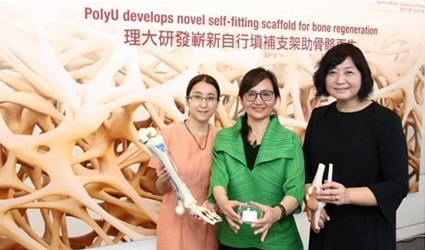
Management of bone injuries made simpler by researchers from the Hong Kong Polytechnic University (PolyU) where researchers have designed a self-positioning scaffold to be implanted into bone fractures that induce bone regeneration.
This novel scaffold aims to enhance the repair of bone injuries and fractures. It incorporates shape memory polyurethane foam and hydroxyapatite, a bone tissue component.
The shape memory material enables the scaffold to be shaped at 0°C and entrenched with this shape at room temperature. It can take its former shape at 40°C. The scaffold can thus fit into the uneven bone defects, and the interim temperatures make it ideal for minimally invasive surgical procedures.
The bone scaffold has a porous, interlinked make-up facilitating cells to travel and generate new tissues. The average pore size of the scaffold is almost equal to that of the interior layer of bone, enabling replication of the real in-vivo microenvironment. The optimal composition is about 60% of space voids.
Moreover, the scaffold proved biocompatible and did not produce any cytotoxicity when tested under laboratory settings. It also had the potential to cause the generation of osteoblasts and blood vessels.
During research, 18 rabbits with femoral bone defects were implanted with the new scaffolds condensed to about half of their original size. When stimulated with 40°C saline, the scaffolds enlarged from their condensed shape to pack the defect within 60 seconds.
12 weeks post the surgery, a quicker bone tissue ingrowth in volume was observed. Results showed 46% of bone ingrowth in implanted rabbits as compared to 24% in the control wing.
PolyU researcher Hu Jinlian said, “The results show that our scaffold has overcome the disadvantages of traditional polymer scaffolds, and has great potential for bone regeneration.”
from Drugdu  https://goo.gl/QgQoHk
2018年8月17日星期五

Parallel Stimulant and Opioid use Rampant in Adult ADHD

"/

Adults with attention-deficit/hyperactivity disorder (ADHD) are simultaneously consuming stimulants and opioids, warranting necessity for research into the merits and demerits of prolonged joint-administration of these drugs.
A cross-sectional study was conducted with Medicaid Analytic eXtract data from 66,406 adults having ADHD in 29 states. Largely, 32.7% took stimulants, and 5.4% had taken stimulants and opioids concurrently for at least 30 successive days. Adults who took stimulants showed frequent long-term opioid use, contrasted with those who did not take stimulants, wrote Yu-Jung “Jenny” Wei, Ph.D., and her colleagues. The results of the report were published in JAMA Network Open.
They also noted that individuals in their 30s demonstrated a 7% higher occurrence of long-term joint use than that with individuals in their 20s. Moreover, those 41 - 50 years old showed a14% elevated incidence, and those 51 - 64 years old showed 17% elevated incidences.
Those who had pain had a 10% increased prevalence of simultaneous consumption, and other factors linked to concurrent consumption included: non-Hispanic white ethnicity, residence in the southern United States, depression, anxiety disorder, substance use disorder, or cardiovascular diseases. Schizophrenics seemed to show a 5% lesser prevalence of concurrent use.
Although the concurrent use of stimulants and opioids may initially have been prompted by ADHD symptoms and comorbid chronic pain, continued use of opioids alone or combined with central nervous system stimulants may result in drug dependence and other adverse effects (e.g., overdose) because of the high potential for abuse and misuse,” the authors wrote. “Identifying these high-risk patients allows for early intervention and may reduce the number of adverse events associated with the long-term use of these medications.”
from Drugdu  https://goo.gl/QgQoHk

2018年8月14日星期二

Research Finds New Compounds to Reverse Key Aspects of Human Cell Aging

"/

Research shows that chief aspects of the aging of human cells can be inverted by new compounds developed at the University of Exeter.
Researchers tested compounds intended to target mitochondria in a laboratory study of endothelial cells. In the samples under study, the number of senile cells was decreased by up to 50%. The Exeter team also recognized two splicing factors that play a major part in when and how endothelial cells become senescent.
"As human bodies age, they accumulate old cells that do not function as well as younger cells," said Professor Lorna Harries, of the University of Exeter Medical School.
"This is not just an effect of ageing—it's a reason why we ageThe compounds developed at Exeter have the potential to tweak the mechanisms by which this aging of cells happens.”
"We used to think age-related diseases like cancer, dementia and diabetes each had a unique cause, but they actually track back to one or two common mechanisms. This research focuses on one of these mechanisms, and the findings with our compounds have potentially opened up the way for new therapeutic approaches in the future.”
"This may well be the basis for a new generation of anti-degenerative drugs."
Professor Harries said the aim was to help people stay healthier for longer. She added: "This is about health span and quality of life, rather than merely extending lifespan."
The new research specifically targeted and aimed at rejuvenating mitochondria in old cells.
In this new study, using fresh chemicals, the researchers were able to precisely target two splicing factors (SRSF2 or HNRNPD) that have a chief role in determining how and why our cells transform with increasing age.
"Nearly half of the aged cells we tested showed signs of rejuvenating into young cell models," said Professor Harries.

from Drugdu  https://goo.gl/QgQoHk

Close Link between Cytomegalovirus and Cardiovascular Disease

"/

A research team from Brighton and Sussex Medical School (BSMS) have found a close link between a Cytomegalovirus (CMV) and the immune cells that could damage cardiovascular tissue. This study has been published in Theragnostic Journal.
Like the cold sore causing herpes virus, Cytomegalovirus (CMV) is considered to be harmless. Our immune system controls this virus and as a result, many people don’t realize that they have it.
The work conducted under Prof Florian Kern, Chair of Immunology from BSMS, has reported the production of a specific type of immune cells due to CMV infection.
These cells, known as CD28null CD4 T-cells, are involved in damaging the arteries around the heart, but it was previously assumed this occurred due to aging.
Dr Alejandra Pera, the lead author of the study said, "While we had previously been aware of a link between these immune cells and cardiovascular damage, this study is the first to show that sufficient numbers to be damaging only occur in the presence of this infection."
Professor Florian Kern commented, "Our work suggests that Cytomegalovirus infection is an important clinical factor to be considered in coronary heart disease and advanced atherosclerosis, and raises the possibility that treatment of the virus may be effective in the management or even prevention of coronary heart disease in a tangible proportion of patients. Tissue type might help identify those individuals most at risk."
from Drugdu  https://goo.gl/QgQoHk

2018年8月8日星期三

Alembic Pharma gets USFDA Approval for Ophthalmic Solution

"/

Hypotrichosis is defined as the condition of abnormal hair patterns which leads to predominant loss or reduction. Usually, hair growth is normal after birth, but later, hair starts shedding and is replaced by abnormal hair growth patterns. The new hair will be short and brittle without pigmentation. By 25 years of age, there will be major hair loss.
Pharma drug firm Alembic Pharmaceuticals has received tentative approval from the US Food and Drug Administration (US-FDA) for their Bimatoprost Ophthalmic Solution. This solution is used to treat hypotrichosis (hair loss) of the eyelashes whereby the length, thickness and darkness would be increased.
At present, Alembic Pharmaceuticals is involved in a lawsuit with Allergan in the District Court of New Jersey and the launch of their ophthalmic solution will be entirely dependent on the consequence of litigation.
Alembic Pharmaceuticals mentioned in a BSE filing that the tentatively approved Abbreviated New Drug Application (ANDA) is therapeutically equivalent to the reference listed drug product (RLQ), LATISSE ophthalmic solution, which is 0.03 percent of Allergan.
By quoting IQVIA sales data, Alembic Pharmaceuticals mentioned that the Bimatoprost Ophthalmic Solution had had a predictable market size of USD 63 million for 12 months by the end of December 2017. Alembic Pharmaceuticals declared that at present, it only has a total of 76 ANDA approvals from the USFDA.
from Drugdu  https://goo.gl/QgQoHk

2018年8月7日星期二

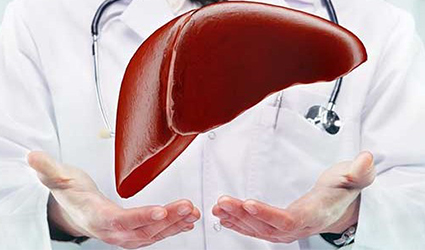
NAFLD Aggravated by Even Modest Alcohol Use

"/

A longitudinal cohort study published in the Clinical Gastroenterology and Hepatology revealed that non-alcoholic fatty liver disease (NAFLD) patients who consumed modest amounts of alcohol had notably low improvement in steatosis and significantly lower chances of recovery of non-alcoholic steatohepatitis (NASH), contrasted with non-drinkers.
Modest drinkers also showed less of a rise in their AST levels, compared with non-drinkers, said Veeral Ajmera, MD, of the University of California, San Diego, and his associates. “Importantly, our results suggest that cessation of alcohol use may mitigate these changes,” they wrote. Clinicians should think of the spectrum of NAFLD, and especially NASH when advising about alcohol use. “More advanced NAFLD severity may warrant counseling against [even] modest alcohol use.”
There were 285 women, white, and obese, in their late 40s with an average body mass index of 34.7 kg/m2 included. Overall, 59% consumed up to two drinks every day, whereas 41% did not consume alcohol. Considering an average of 47 months between biopsies, non-drinkers showed 0.49 reduction in steatosis grade on an average, significantly higher than that of modest drinkers. Non-drinkers also showed a sharper decline in mean AST levels (7 U/L), contrasted with drinkers (2 U/L).
On controlling for the possible contributing factors, modest drinkers had remarkably lower chances of NASH resolution, compared to non-drinkers.
“[The] presence of NASH has consistently been shown to predict increased risk for fibrosis progression, and therefore, our finding of less NASH resolution among consistent modest drinkers is clinically relevant,” the investigators noted. “Although we were unable to assess the association between modest alcohol consumption and cardiovascular risk, we did not see any significant changes in measured metabolic risk factors with known associations with cardiovascular disease including low-density lipoprotein and high-density lipoprotein cholesterol and insulin resistance.”
from Drugdu  https://goo.gl/QgQoHk